
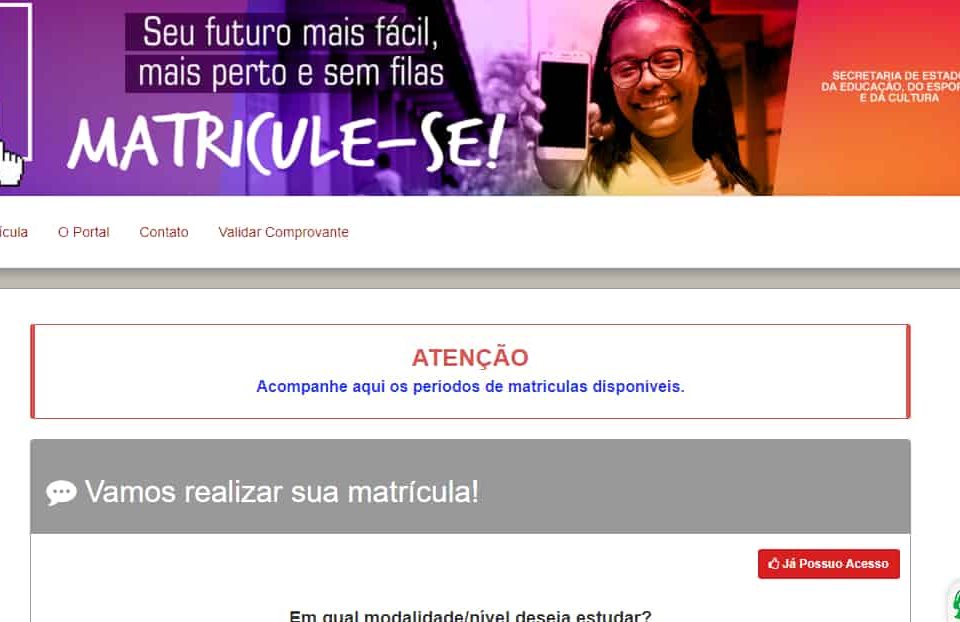
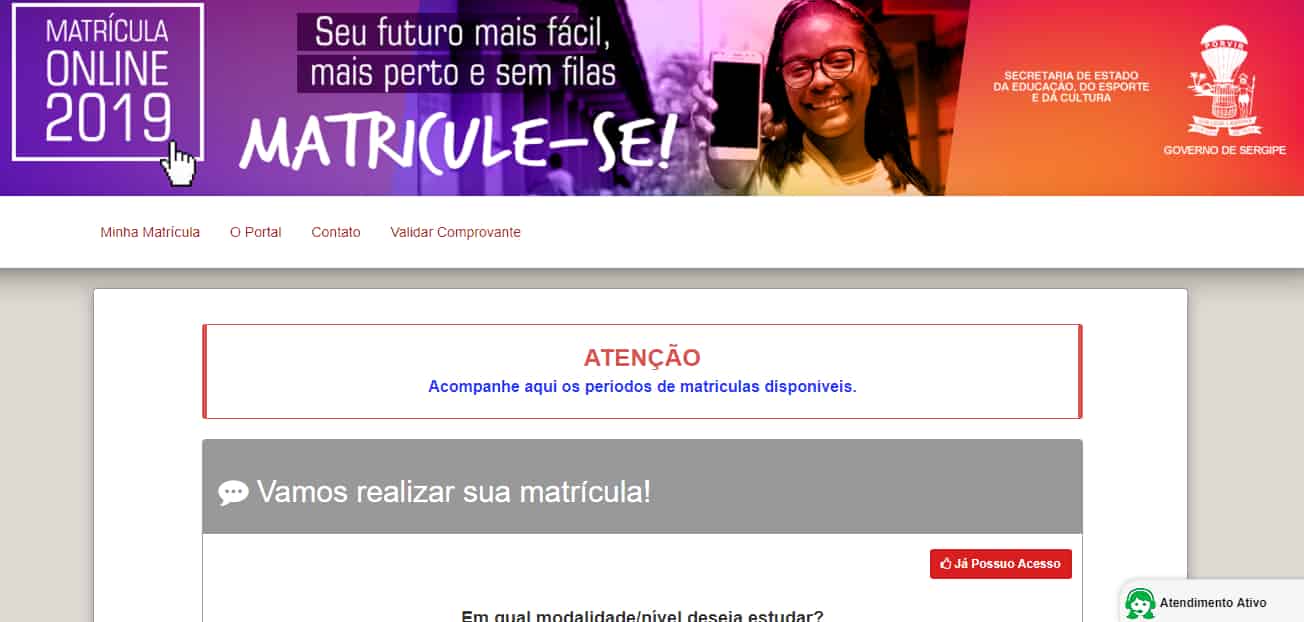
Matrícula Online SE SEED : www.seed.se.gov.br
A Secretaria do Estado de Educação de Sergipe criou o Portal Matrícula Online SE SEED para facilitar a sua vida! Nesse portal, é possível realizar e acompanhar a pré-matrícula na rede estadual de ensino. Quer saber como funciona o Matrícula Online SE SEED? Acompanhe esse post até o final.
A rede estadual de ensino de diversas localidades em nosso país já oferece a possibilidade de realização de pré-matrícula online e o Sergipe não ficou de fora dessa iniciativa.
Quem tem filhos matriculados na rede estadual passa por momentos de correria e ansiedade todo ano na hora de realizar a matrícula.
No Portal da Matrícula Fácil 2024, esse processo se torna muito mais simplificado pois você pode reservar sua vaga sem sair de casa. Depois, para efetivá-la, basta dirigir-se ao colégio/escola escolhido no dia determinado, portando todos os documentos necessários, e garantir a vaga para estudar.
Além de reservar uma vaga para estudar, também é possível solicitar a transferência de uma escola estadual para outra.
Nos tópicos a seguir, entenda melhor como funciona o Matrícula Online SE SEED e planeje-se para reservar sua vaga.
Matrícula Online SE SEED: Como Funciona?
O que é o Portal da Matrícula Online?
O Portal da Matrícula Online SE SEED foi desenvolvido pela Secretaria de Estado da Educação de Sergipe e engloba serviços com o objetivo de trazer mais comodidade a todos os alunos que querem ingressar ou permanecer em instituições da rede estadual de ensino.
O Que Eu Posso Fazer no Portal da Matrícula Online?
Como dissemos, atualmente, é possível fazer dois tipos de cadastro no Portal da Matrícula:
- Reserva de matrícula para quem já estuda ou quer estudar na rede estadual
- Transferência de uma escola estadual para outra
É Necessário Fazer Algum Cadastro Complexo?
Não. O cadastro no Portal é bastante simples e devem ser informados apenas alguns dados básicos.
Se o aluno já for cadastrado, ele pode fazer o login digitando seu código e sua senha nos campos indicados nessa página (coluna da esquerda).
Caso ele ainda não esteja cadastrado, basta inserir seu nome, o nome de sua mãe e a sua data de nascimento nos campos indicados no site de aluguel (coluna da direita). Em seguida, ele receberá seu código de acesso e sua senha para poder acessar o Portal.
É Necessário Apresentar os Documentos Pessoalmente no Momento da Efetivação da Matrícula?
Durante o processo de reserva de matrícula no Portal, o aluno deverá anexar seus documentos para fins de verificação. No entanto, é necessário também levar os documentos originais na escola dentro do prazo estabelecido pela mesma. Enquanto isso não acontecer, a matrícula ficará pendente.
Matrícula Online SE SEED: Inscrição
Para fazer seu cadastro, basta seguir os passos que demos no tópico anterior. Esse cadastro pode ser feito a qualquer momento.
No entanto, para fazer a inscrição no Matrícula Online SE SEED, é necessário aguardar os períodos de matrícula. Você pode obter mais informações sobre esses períodos.
Não deixe de acompanhar e aproveite a chance de reservar sua matrícula sem sair de casa. Bons estudos!